Welcome to the 2nd AnaEE Science Conference:
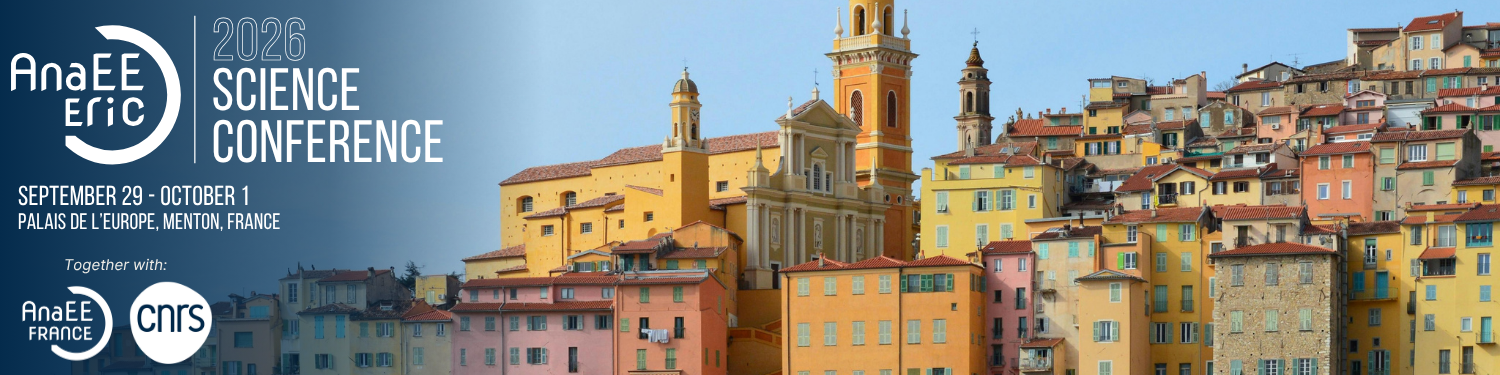
Ecosystem Science For a Resilient Future
SEPTEMBER 29 - OCTOBER 1, 2026
PALAIS DE L'EUROPE, MENTON, FRANCE
The 2nd AnaEE Science Conference brings together leading ecosystem scientists to advance our understanding of how ecosystems can withstand and adapt to global environmental change. The conference spans experimental approaches to global change ecology, forest and agricultural resilience, aquatic-terrestrial interactions, and innovative data integration methods.
Join us in Menton for three days of transformative science that will help build the foundation for a resilient future. Registration opens January 11 2026.
Why Attend?
For Scientists: Discover cutting-edge advances in ecosystem experimentation, from ecotron facilities to digital modeling approaches. Present your research on climate adaptation, biodiversity resilience, and sustainable ecosystem management alongside Europe's top researchers in functional ecology.
For Policymakers: Join dedicated stakeholder sessions focused on translating ecosystem science into actionable policy. Learn how the latest research supports evidence-based decision-making for climate resilience, biodiversity conservation, and sustainable development goals.
AnaEE Environmental Rising Star Award
In 2026 we are introducing the AnaEE Environmental Rising Star Award, recognizing exceptional postdoctoral researchers within four years of PhD completion. More information on how to participate on the dedicated page.
Key information |
|
|
*AnaEE affiliated = institution belonging to one of the National Nodes member or observer of AnaEE-ERIC, list on our members' page.
Stay Informed
Subscribe to our newsletter to be the first to know when abstract submission opens, who our keynote speakers will be, and more!
Contact: anaeesc26@anaee.eu
---
AnaEE (Analysis and Experimentation on Ecosystems) is an ESFRI Landmark European Research Infrastructure – providing resources within ecosystem research, such as data, modelling and experimental facilities.)
|
This conference is organised in collaboratoin with CNRS, AnaEE-France and a policy session together with PlanBleu.
|